1991 to 1995

Property Companies, Mayfair Mortgage Services, Duke Street and Land Securities, Bankruptcy

Personal Bankruptcy 1995 and Consequences

Welcome to my Personal Blog! While many of the blog posts here are entirely public and open to everyone, I also write about more sensitive subjects, personal viewpoints, and private information that I prefer to share only with real people and a trusted circle of readers. If you come across a restricted post and would like to read it, please take a moment to fill out the brief form below with your first name, surname, and email address. You will instantly receive a verification link in your inbox. Once you click that link to confirm your email, it will unlock permanent access to every restricted post across the entire site. I truly appreciate your support and understanding and look forward to receiving any comments or feedback!

Personal Bankruptcy 1995 and Consequences Read More »

Nationwide Power Communications Ltd

Nationwide Power Communications Ltd (NPC)

How I Started in Telecoms

In 1993/1994 I formed a new Telecoms company, using my investment knowledge and expertise, to raise approximately £400,000 from professional investors.

I presented the business to potential investors at one of the meeting rooms available in the large building known as Telehouse based in London’s new Docklands area.

Telehouse is a Data Centre specialising in providing secure and essential facilities for bespoke servers, such as internet access and power supply, with back up facilities to ensure  maximum “up time” or uninterrupted service – particularly important for a telecoms business. It also provided easy access to other telephone networks.

NPC Rationale – Business Opportunity with Phonecards

At this point in time, the telecoms market in the UK was dominated by two companies – the long established National Telecoms Operator, British Telecoms (BT) – and the relatively new Mercury Communications part of Cable and Wireless. BT had effectively had a monopoly for many years, and Mercury was formed to break that monopoly. However, both companies charged high prices for phonecalls, particularly to international destinations,

Many calls were made using a payphone or phonebox  which accepted coins (cash). However a new telecoms product had been developed some years earlier which was the Telephone Card, or phonecard, as it became widely known. Of particular interest to me was the prepaid phonecard using a remote memory system, which could be used in Payphones – or from any other telephone – by first dialling a Freephone or Toll-Free number

Requirements

In 1993, to be able to offer a phonecard service, there were three major requirements.

The first was to have our own “telephone exchange” or telephone “softswitch” and the most important feature of the “switch” – or computer software – would be the Billing system, which would ensure that the correct charge would be made for any call, and the credit balance on the prepaid phonecard carefully monitored. This crucial software solution was produced by Gideon Goldschmidt – see below for more info on Gideon.

The second requirement was to obtain the Toll-free numbers that would be promoted on each card, and would carry the incoming call to the server hosting our telephone softswitch, which would be situated at Telehouse.

The third requirement was to be able to connect the customer’s outbound call to the required destination, which meant that we needed agreements in place with Telecoms Companies (Carriers) who could provide such a service, either for national or international calls.

There were several businesses in the UK offering to produce or manufacture phonecard products – basically credit card sized plastic cards – which could then be branded, and carry the PIN (secret password under a “scratch-off” panel) together with the appropriate Freephone or Toll-Free access number.

The Unique Selling Point (USP) for the new business was that we could offer telephone calls far more cheaply than the established UK Telecommunication Networks – BT and Mercury – particularly calls to international destinations. 

Our potential UK market included Tourists, Students, small businesses, anyone who did not have a landline available at home or indeed anyone who needed to make cheaper international calls. Two of our early customers were the Royal Air Force and the Royal Navy, for whom we produced special telephone cards depicting stirke aircraft and the famous carrier the Ark Royal. This of course pre-dated by 30 years the Mobile Phone, and Communication Services via the Internet widely available today (2021).

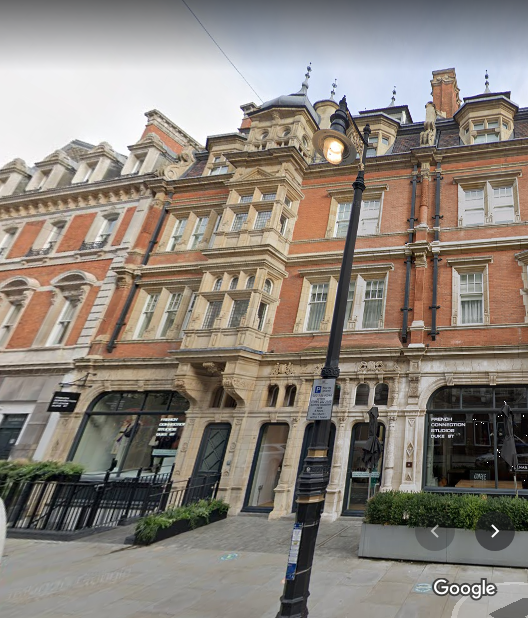
The new company’s offices were on the top floor of 63 Duke Street London W1, the offices I had taken over following the demise of Noble Warren Investments Ltd.

How I raised the Necessary Venture Capital

In the early ’90s, to encourage Investors and to help new businesses attract the start up capital  or venture capital they needed,  the UK Government had developed the Business Expansion Scheme (BES) – later known as the Enterprise Investment Scheme (EIS) .

For investment into new businesses that met the criteria, there were several important and generous tax advantages available to the investors, in particular, relief from Higher Rate Tax in the year the investment was made, and the removal of Capital Gains Tax on any subsequent sale.

I structured first Nationwide Power Communications Ltd, and some years later easy-dial Ltd, as BES companies. Another example of a startup business that later operated under the BES scheme was the RIverside Racquets Club.

Once I had decided on the structure of the new company, the bigger problem was one of where to find the potential investors and how to persuade them to become shareholders.

Matrix Securities Ltd

Matrix Securities Ltd was a company formed in 1986 and trading out of Vine Street in London. I believe the business was first drawn to my attention by my good friend Charles Sayer: it was of interest to me because it was linked to raising Venture Capital, and other ways of finding startup funding for small businesses, such as the new Telecoms business I had in mind, which was Nationwide Power Communications Ltd.

Matrix had accumulated lists of “professional investors” potentially interested in investing in “start-up” businesses where the risks of investing were obviously higher than average but conversely the potential rewards of owning shares in a business that went on to become successful were also higher. Potential investors on the Matrix lists were ideal prospects for me, particularly where the unique BES tax advantages would apply.

Matrix Securities Ltd offered an in-house service, which included mailing the names on their private contact lists with details of a new business: at the time, there was no email listing, which would have made the process a good deal simpler and less expensive!

I put together a Prospectus, detailing the company business plan and the members of the management team, which was proofed and agreed by Matrix, and this was mailed out to a suitable list of prospective investors in 1993/1994. The Prospectus contained a postal “reply slip” with a FREEPOST envelope to indicate further interest, and any responses were sent to me.

Management Team

Because my own expertise was at the time related to running financial businesses, I realised that a Team was needed with sufficient expertise in Telecoms to persuade investors that the new company had a chance of succeeding.

Gideon Goldschmidt – Technical Consultant
Gideon is a very talented software programmer and was the designer of the bespoke software that was used to provide the company’s unique telephone service. At the time he was involved with another entrpeneur, Adam Toop, who ran a business called Adam Phones, based in Chiswick, London, close to my home.
Gideon and his son – another talented software engineer – worked together as a team on various software projects.

Russell Mcanulla – Managing Director
Now apparently working in a small family business called Sheldon Reed, I have no recollection as to how we met. I see from Companies House records we were both directors in a company called Telefriend, but I have no idea why, or what it did. I remember meeting his wife Dianne and being invited to their home in Fleet. He obviously impressed me, because I offered him the job of Managing Director in my new company, only to be well and truly shafted after six months. 

Gary Sheppard – Director
Again I have no clear recollection of how I met Gary Sheppard, except that he was working with BT at the time and had the requisite experience in the Telecoms business. He may even have been one of my customers from Merchant Investors. Suffice to say that he was eminently fogettable, but fulfilled a role briefly as our Telecoms Director.

Ken Orrell – Sales Director
I cannot even now remember where and how I met our sales director: he was ex-army and a good salesman, and I offered him a job when he badly needed it. 

Jacqueline Peat – Office Manager
The one good thing to come out of NPC was Jackie Peat. Born to Jamaican parents and brought up in Lewisham London, at the time Jackie was unmarried with one daughter. With strong opinions, and an equally strong work ethic, she ran the office administration extremely well, and was very loyal. She later moved with me to the next telecoms company I formed which was easy-dial Ltd and carried on in office administration and customer relations. I owe her a great deal.

So What Went Wrong? Betrayed by "Little Shits"

After six months or so trading from 63 Duke Street, and starting to market the products and form the customer base for the new Company, Messrs Mcanulla Sheppard and Orell, the three musketeers – or “little shits” as I refer to them now – decided that the Company did not require my services, and they launched a Boardroom Coup

To be fair, Jackie Peat had tried to warn me on several occasions, but I had not heeded the warnings, and had assumed that there was not a serious problem. Of the three, I was the most disappointed in Ken Orrell, who seemed to me to be a decent bloke: they owed me a great deal, and all three were drawing generous consultancy fees from the new business.

I was of course very angry and disappointed: this was a major betrayal of trust. In truth, none of them were necessary to the Company, and I had only appointed them to strengthen our Board of Directors in the eyes of the Investors – our Shareholders. The only essential member of the Company was our technical Consultant, Gideon Goldshmidt, who developed and maintained our Telephone Exchange, or SoftSwitch. Unfortunately, they had “got” to Gideon, and I could not rely on him for support.

An EGM was called, with Telehouse as the venue, attended by a large number of Shareholders, who were faced with a simple choice – to either support myself or “the others”. I addressed the meeting, and warned them that, in my opinion, leaving the business in the hands of the little shits would have disastrous consequences for the Company and their investment. Unfortunatley, the Shareholders were persuaded otherwise, and in a vote, I was removed from the Board of Directors and effective control.

Some six months later, I was proved 100% correct: the company was milked dry of funds, and wound up, with Investors losing their money. As far as I know, there was no subsequent investigation of malpractice or negligence, but in my opinion, the little shits were no better than opportunistic thieves, and should have been prosecuted.

For me, this betrayal had serious consequences: apart from the damage to my own reputation, and losing my consultancy fee from NPC, the principal tenant at 63 Duke Street had disappeared overnight, which led directly to major difficulties with the Landlord and my subsequent Bankruptcy.

Nationwide Power Communications Ltd Read More »

63 Duke Street London Offices

63 Duke Street London W1 1991 to 1994

63 Duke Street London W1

Foreword

Following the closure of Noble Warren Investments Ltd it was no longer viable for me financially to maintain the Offices at 50 Maddox Street, and so I terminated the lease as soon as was possible.

I wanted to stay in the same area of London with which I was familiar, and was not ready to leave the office environment. For me, working from home was a last resort and would not encourage entrepeneurial activity. It was important to have an office, where meetings with potential customers and colleagues could be held while I looked for the next business opportunity. And – more importantly – this was before the widespread availability of Broadband and high speed internet which would make running a business from home that much easier.

Through my previous connections, I discovered that the existing tenant and owner of the lease on 63 Duke Street, part of the portfolio of UK Property Company Land Securities Ltd, was looking to surrender the 15 year lease and was willing to pay a reverse premium.  This was a commercial property and it was also a good address in London’s West End within easy reach of the Central Line and Jubilee Line underground stations of Oxford Circus and Bond Street respectively.  The rent was reasonably low and the property in reasonable condition. There were two or three sub-tenants in the building at the time who I hoped would remain, and from whom I would collect rent which would contribute towards the amount payable in the lease agreement. I made the commercial decision to take over the lease – I had office furniture and equipment from Maddox Street that I could transfer to the new offices, and the Reverse Premium I received was enough to cover the payments due under the terms of the lease for a couple of years. 

As with the previous offices in Maddox Street, I started with the top floor of the building, which was essentially a house in the period style with 3 floors and a large basement used at the time for storage. The ground floor was not part of the lease, and was a fastfood restaurant. The first second and third floors consisted of one large room overlooking the street. There was no lift – again a slight drawback – and stairs connected the first and subsequent floors via a secure front door, with an intercom system for each floor. 

The top floor started as my personal office, and  was “open plan”, with an interesting feature which was a small roof garden accessible by ladder! As before, I used the Panasonic telephone system to interconnect between floors and make outside calls.

Close by were Portman Square and Manchester Square,  pleasant places to have a walk or relax, and Oxford Street, with Marks and Spencers and Selfridges, was two minutes on foot. 

Activities, Businesses and Personalities

Companies Formed

When I moved to 63 Duke Street in 1991, the first order of business was to find an alternative source of income which would replace Financial Services and to create new trading Companies as vehicles for any new enterprises.

I first formed Mayfair Mortgage Service Ltd in July 1991 as an umbrella company for any current or future property dealings or interests.

Marketing Companies.

The obvious place to start was in Sales and Marketing, and over the course of the next few years I formed three UK companies which were Marketing companies. I liked the word “Power” and used it as part of each of the names.

Powerpen Ltd. This company was for once not my brainchild, and was the first “power” company formed in March 1992. The products were different types of Pen from the most simple to the more expensive which were marketed by a form of MLM which encouraged the sale of the “powerpen”. The pens were despatched to customers from the offices.

Powerhouse Marketing Ltd. This company was formed in September 1992 with the intention of using  the name for any general marketing projects.

Power Communcations Ltd was also formed in September 1992 with the purpose of  focussing more on business linked to products or services related to telecoms and communications. 

New Companies, Officers and Duke Street Personalities.

All the Power Companies had Directors in common – namely myself, Paul Hesling, William Welch and Martin Hopper. I first met all three at 63 Duke Street, although I cannot remember the exact circumstances.

Paul Hesling was a tall “larger than life” character with a great sense of humour and personality, and I am certain that he would have been successful at GCP or Merchant Investors or any other sales oriented business. He worked very closely with best friend Will Welch, and they were both involved with various marketing schemes before I met them. Martin Hopper was a quieter more serious personality, and he also had experience in MLM Sales and Marketing. Powerpen was the first and last project that we were all actively involved with, and Paul’s idea, and unfortunately it was no more than modestly successful.

I have since tried to “track them down”, hoping that I would find them on LinkedIn or Facebook, but without success. The information available from Companies House does mention a Paul Philip Hesling as a Director for a company called Energy7 Ltd but I am not certain that this is the same Paul Hesling.

They were all talented marketing consultants, and – importantly for me – possessed the “entrepeneurial spirit”. They were also great company, and it was a pleasure for me to be able to focus on new ideas with them. They moved on to other marketing businesses as my attention turned to another opportunity – in the UK Telecommunications Market – but the parting was wholly amicable.

The next chapter in my entrepeneurial journey was about to start with Nationwide Power Communications Ltd

63 Duke Street London Offices Read More »